
People are dying of hunger” in Ethiopia — Tigray on the brink of humanitarian disaster

After two and a half months of conflict, NGOs still have very limited access to the region, where food and healthcare are deeply lacking for the 6 million inhabitants.

Since the start of the conflict in Ethiopia between federal government troops and those from the dissident province of Tigray, ten weeks ago, humanitarian organizations have found it difficult to come to the aid of the displaced and wounded. The region of 6 million people, where the conventional war of November 2020 gradually gave way to guerrilla warfare in the countryside, is devastated by fighting and hunger.

Médecins Sans Frontières (MSF), one of the few NGOs able to reach the center of Tigray, estimates that around 4 million people do not have access to health care. That is two thirds of Tigrayans. The few convoys that have been able to reach the region, like those of the Red Cross and the World Food Program (WFP), are more the exception than the rule.

“The situation is getting worse every day. The conflict began two and a half months ago and the majority of residents are still waiting for humanitarian aid,” warns Saviano Abreu, spokesperson for the United Nations Office for the Coordination of Humanitarian Affairs (OCHA). Hunger is at the center of concerns: it is gaining ground in a region already partially ravaged by the invasion of locusts in the fall and where war broke out a few days before the harvest.

Food supplies are deeply lacking and WFP’s 18 trucks are just a drop in the bucket in an ocean of shortages. “During our assessment, we noticed an increase in malnutrition in children under 5 years old,” says Saviano Abreu.  A fear expressed bluntly by the interim administrator of the Central zone of ​​Tigray, Berhane Gebretsadik: “People are dying of hunger. In Adwa, they even die of hunger in their sleep.”

EU mentions “possible war crimes”

Faced with this urgency, the international community is making a change of tone. The objective: to obtain absolutely independent access to Tigray as quickly as possible, which currently is refused by the Ethiopian authorities. The European Union (EU), after having suspended the payment of part of its financial assistance to Ethiopia, now evokes “possible war crimes” in the province. EU High Representative for Foreign Affairs, Josep Borrell, writes that “the situation goes well beyond a law enforcement operation.”

Beyond the alarming figure of 2 million internally displaced persons, Josep Borrell denounces human rights violations: “We continuously receive information concerning ethnic violence, massacres, large-scale looting, rape and forced return of refugees to Eritrea.” The Belgian organization Europe External Program with Africa (EEPA) reports a massacre in The Church of Our Lady Mary of Zion, in Aksum, which is said to have claimed the lives of around 750 people, a witness confirmed for La Monde Afrique.

Humanitarian sources returning from Tigray and wishing to testify anonymously abound in this direction. Thousands of women are said to be victims of sexual abuse. More surprisingly, a sharp increase in suicidal behavior has been observed, especially among individuals caught in the midst of violence, and forced to flee their villages and their families. Other sources describe looted hospitals and populations deprived of any medical equipment, left to fend for themselves until the arrival of aid workers.

Inaccessible refugee camps

An Ethiopian refugee in a camp in Mafaza, eastern Sudan, January 8. ASHRAF SHAZLY / AFP | via La Monde AFrique

The other great unknown is the fate of a good number of Eritreans, historically refugees in camps in Tigray usually administered by the United Nations High Commissioner for Refugees (UNHCR). Of these four camps, only two are accessible. The other two, Hitsats and Shimelba, are blocked by Ethiopian and Eritrean forces deployed in Tigray. A blockade in order deplored by the head of the UNHCR: Filippo Grandi is worried about “the persistent insecurity and allegations of serious human rights violations, including murders, targeted kidnappings and the forced return of refugees to Eritrea.” For him, “these are precise indications of major violations of international law”.

While the UNHCR was able to carry out a reconnaissance mission in early January, aid is slow to materialize. Another organization, the Norwegian Refugee Council, is also having a lot of difficulty getting to Tigray, where it employs 100 local workers. “What is being done today in terms of humanitarian aid is simply too little and too late”, assures its director, Jan Egeland, who says he is “extremely disappointed by the slowness of administrative procedures.”

In fact, in order to reach the province, NGOs must seek the approval of the Ethiopian Ministry of Peace, which is responsible for coordinating humanitarian aid. An NGO manager who wants to remain anonymous complains about the deadlines for validation of missions, “which are supposed to last forty-eight hours and which sometimes take ten days”. Contacted by Le Monde Afrique, the Ministry of Peace did not respond to our interview requests. If the UN complains about “bureaucratic delays”, Jan Egeland is frustrated by the authorities’ lack of cooperation: “In November, we were simply ignored. Today there is a dialogue but still no authorizations.


This article was first published on Le Monde Afrique in French. 
ዶ/ር አብይ አሕመድ በጣልያን ቦለኛ የህክምና እርዳታ እየተደረገላቸው ሊሆን እንደሚችል ተገለጸ

ከህዝብ እይታ ለበርካታ ሳምንታት ርቀው የቆዩት ዶ/ር አብይ አሕመድ አሊ፣ ትላንትና ማታ በአንድ የአውሮፕላን አምቡላንስ ከአዲስ አበባ/ፊንፊኔ ወደ ጣልያን ሳይጓዙ እንዳልቀረ ተገለጸ።

የአውሮፕላን አምቡላንሱ ዛሬ በጣልያን ቦለኛ ማረፉ ተረጋግጧል።

ትላንትና ማታ የጠቅላይ ሚንስቴሩ ጽህፈት ቤት በዶ/ር አብይ አሕመድ ጤንነት ዙሪያ እየተናፈሰ ያለው ወሬ ሀሳት ነው የሚል መልዕክት በትዊተር ገጹ ማስተላለፉ ይታወሳል።

ይሁን እንጂ የአፍሪካ ቀንድ የፖለቲካ ተንታኝ የሆኑት ዶ/ር በሽር ሀሺ ዩሱፍ፣ ዶ/ር አብይ ከጥቂት ቀናት በፊት ከሱዳን ዲፕሎማቶች ጋር ሲወያዩ ታመው እንደነበረ መረጃው ደርሶኛል ይላሉ።

የሰላም ሚንስቴር ሚንስትር ወይዘሮ ሙፈሪያት ካሚል በበኩላቸው ዶ/ር አብይ በስራ ገበታቸው እንደሚገኙ በፌስቡክ ገጻቸው ገልጸዋል።

የአፊርካ ቀንድ የፖለቲካ ተንታኝ የሆኑት ራሽድ አብዲ ዶ/ር አብይ ከህዝብ እይታ መራቃቸው ያልተለመደ ሆኖባቸዋል።

አንዳንድ ኢትዮጵያውያን ዶ/ሩ የፖለቲካ ሴራ እየሸረቡ ሊሆኑ እንደሚችል ይገምታሉ። ሆኖም ሌሎች በርካቶች አገሪቱ በሁሉም አቅጣጫ ከራሷና ከአጎራባቾቿ ጋር ጦርነት በከፈተችበት ወቅት እንዲህ ያለ ዜና ይበልጥ ቀውሱን የሚያባብስ እንጂ የሚበጅ ባለመሆኑ፣ ዶ/ሩ ካሉበት በቀጥታ ስርጭት ለህዝብ መልዕክት በማስተላለፍ አገሪቱን ማረጋጋት ይኖርባቸዋል ይላሉ።

ይህ በእንዲህ እንዳለ በማህበራዊ ሚድያ አንዳንድ ደጋፊዎቻቸው በብልጽግና ውስጥ ክፍፍል መፈጠሩን ይናገራሉ። የዶ/ሩ ደጋፊ አቶ ስዩም ተሾመ የመታመማቸውን ዜና ተከትሎ ትላንትና ማታ በፌስቡክ ገጻቸው ባሰራጩት መልዕክት “በአዲስ አበባ (ፊንፊኔ) እና በኦሮሚያ አመጽ ሊቀሰቀስ እንደሚችል መረጃ ደርሶኛልና ለሚመለከታቸው መልዕክቱን አድርሱልኝ” ብለዋል። (ያ መልዕክት በማግስቱ ከገጻቸው ተነስቷል።) ሌሎች በርካታ የዶክተሩ ደጋፊዎች ዶክተሩ በጤናና በመደበኛ የስራ ገበታቸው እንደሚገኙ በገጾቻቸው አስፍረዋል።

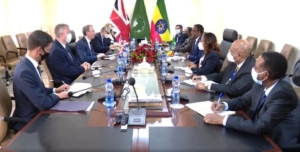
የኢንግሊዝ ውጭ ጉዳይ ሚንስቴር ሚ/ር ዶምኒክ ራብ በኢትዮጵያ ቆይታቸው ከዶ/ር አብይ ጋር መነጋገራቸውን በትዊተር ቢገልጹም በምስል አብረው የታዩት ከም/ጠ/ሚ/ር ደመቀ መኮነን ጋር መሆኑ ብዙዎችን አነጋግሯል።

አቶ ደመቀ መኮነን የቀድሞ የብአዴን፣ የዛሬ የአማራ ብልጽግና ፓርቲ አመራር ሲሆኑ፣ የውጪ ጉዳይ ሚንስቴር ሚንስትርነት ማዕርግም ደርበው መያዛቸው ይታወቃል።

አቶ ደመቀ ቀደም ሲል በመተከል ይታይ የነበረው ግጭት፣ መፍትሔው ምንድን ነው ተብለው ሲጠየቁ፣ አማራን ከማስታጠቅ ውጪ ሌላ መፍትሔ የለውም በሚለው አወዛጋቢ ምላሻቸው ይታወቃሉ።

ዶ/ር አብይ ለመጨረሻ ግዜ ለህዝብ በአካል የታዩት በመተከል ከአገር ሽማግሌዎች ጋር ሲወያዩ እንደነበር ይታወሳል። በተወያዩ በማግስት በተነሳ ግጭት ከ200 በላይ ሰዎች ተገድለው ማደራቸው በተለያዩ የሚያድያ አውታሮች ተዘግቦ ነበር።

በመተከል በቀጥታ ከሚጋጩት ከአማራና ከጉምዝ ብሔሮች ባሻገር በተዘዋዋሪ የኦሮሞ ታጣቂዎችና የሱዳን ምናልባትም የግብጽ እጅ ሊኖርበት እንደሚችል አንዳንዶች መላምታቸውን ያጋራሉ።

የኢትዮጵያ መንግስት በትግራይ ላይ የከፈተው ጦርነት አገሪቱን ለተለያዩ ጥቃቶች አጋልጧታል፣ ህልውናዋንም አደጋ ላይ ጥሏል ይላሉ አንዳንድ ተንታኞች።

The East African war escalates, Ethiopia accuses Sudan of occupying 9 camps

NetEase| According to Ethiopian sources, Ethiopian ambassador to Sudan Ibtalal Amero accused the Sudanese army of occupying nine camps in Ethiopia. In Khartoum, the capital of Sudan, Amelo told representatives of the UN Truce International Organization and foreign ambassadors: “We are surprised by the Sudanese army’s attack on Ethiopian territory. Since November last year, the Sudanese army has occupied 9 camps in Ethiopia.”

While Ethiopian diplomats called on the Sudanese army to stop cross-border attacks and resolve the border issue with Ethiopia by peaceful means, the head of the Sudanese National Border Commission, General Moaz Ahmed Tango, denied that the Sudanese army “controls Ethiopia”. Territory. He said: “There is no Sudanese army on Ethiopian territory. They are all deployed in Sudan and they know the location of the border.”

At the same time, the Ethiopian army is deploying its “Armor-S1” air defense missile system to the border with Sudan. This happened against the background of the deterioration of relations between the two countries. The Ethiopian armed forces are gathering military forces in the border area with Sudan. The situation between the two countries has deteriorated due to another border dispute. The Sudanese military said that the Ethiopian Air Force of Ethiopia attacked its own targets. It is said that the attack by the Ethiopian government forces resulted in the death of civilians and the death of the Sudanese Defence Force.

The Ethiopian army is deploying reinforcements along the border with Sudan. In this case, Ethiopia will be given a special role for its air defense. Among other air defense missile equipment transferred to the border, the “Armor-S1” air defense missile and Russian radar system shipped from Russia to Ethiopia in 2019 were seen. With the help of Russian air defense missiles, the Ethiopian military intends to defend against air strikes by Sudanese fighters.

“The Ethiopian army organizes heavy weapons near the border with Sudan. Amhara has been pushing their prime minister into war. Internally against Tigray  and externally against Sudan. It seems that the end of the old empire is near!” The Sudanese side believes that the Ethiopian army is opening fire everywhere, but if the Ethiopian government forces go to war with Sudan, it will inevitably face the tragedy of total defeat.

The “Armor-S1” air defense missile performed well during the armed conflicts between Syria and Libya. The targets of the “Armor-S1” air defense missile include modern Turkish inspection and strike integrated drones. Considering the potential enemy of Ethiopia, the Sudanese Air Force uses outdated aircraft and helicopters, mainly Russian MiG-29 fighter jets and Chinese-made “Mountain Eagle” trainer attack aircraft. This modern air defense system is used in areas where conflicts may occur. The emergence of the Sudan Air Force greatly complicates the use of fighters.

Pterosaur Rainbow drones (UAV) are put into battle, attacking Ethiopian rebels at night, killing 500 people on the spot

UAV Network 2020-11-30 | The Asian-African conflict that was just quelled a while ago finally ended with Azerbaijan’s victory. In this war, drones as a new type of military weapons showed up on the battlefield, and soon won the world’s Concerned, some experts even predict that in future wars, drones will replace armed helicopters and become the new darling on the battlefield. This is true when used in the recent conflict between Ethiopia and the “rebels”.

Satellite data provided by a US space company recently showed that buildings in areas where Ethiopia was engaged in combat with rebels were suspected of being subjected to a wide range of precision-guided strikes, and the rebels who used buildings as shelters suffered a devastating blow. In this attack, at least 500 rebels were wiped out on the spot. The Ethiopian government forces had absolute initiative at the beginning of the battle. Such a precise air strike was definitely not done by the Su-27 of the Ethiopian Air Force. It was the Ethiopian Air Force that used the killer weapon. Judging from the current situation in Ethiopia, Ethiopia and the UAE Air Force stationed in Eritrea both use this killer weapon: it is possible to armed drones. The Ethiopian side uses the Rainbow 4 weapon. The man-machine, and the UAE Air Force, is likely to use the Pterosaur 2 armed drone.

Read More China Has Been Spying On The African Union Headquarters

Both of these drones are excellent products manufactured in China, and have been exported to many countries and regions in the world. The Pterosaur 2 was developed by my country’s Chengdu Aircraft Industry Group. The aerodynamic layout of the Pterosaur 2 and the previous Pterosaur domestic UAV is generally similar, but the size of the Pterosaur 2 is almost a circle larger than the Pterosaur, so Compared with the pterosaur, the descendant pterosaur 2 has a significant improvement over the pterosaur in terms of bomb load and maximum range. In the seven years since it was put on the market, the Pterosaur 2 has been successfully equipped in many countries, and it has achieved normalized applications. It has also performed well in actual combat. The Rainbow 4 UAV is my country’s “Rainbow” series UAV Representative products in China are also exported to the Middle East and Europe.

Read More The UAE supports Ethiopia and dispatched drones to fight the rebels

And it shines in the struggle against the armed elements. Both types of drones represent the advanced level of Chinese drones. Compared with UAVs produced in the United States, U.S.-made UAVs have always been popular in the international arms market before China’s UAV momentum has risen, but since Chinese UAVs entered the international market many countries were immediately attracted by the ultra-high cost performance of our drones. At the same time, our drones are more durable than American drones, easy to maintain, which has successfully shaken the US drones in the international market. Dominance.

In this conflict, Ethiopia once again used Chinese domestic drones. Obviously, after the conflict in the Tigray region, the use of drones in modern warfare has also been attracted by countries all over the world and started imitation.

‘Egypt working to destabilize Ethiopia, East Africa’ — Ethiopia

Anadolu Agency | Ethiopian diplomat says Cairo trying to weaken Ethiopia and volatile Horn of Africa region

ADDIS ABABA, Ethiopia — The Egyptian government has been stepping up its long-standing policy of destabilizing and weakening Ethiopia by “providing full support to anti-peace elements” and pitting neighbors against it, according to a top Ethiopian diplomat.

The official, who holds a high position in the Ethiopian Foreign Ministry and asked for anonymity, told Anadolu Agency that “Egypt has intensified its destabilization efforts against Ethiopia and the volatile Horn of Africa region.”

Ethiopia’s reformist administration, led by Nobel Laureate Prime Minister Abiy Ahmed, who took office in 2018, has faced multiple domestic and external security challenges.

Last November, Ahmed told parliament that since he became premier, Ethiopia had witnessed 114 ethnic and religious conflicts, resulting in the deaths of thousands and displacements of millions of people.

According to him, all those conflicts were manufactured, instigated, and led by Ethiopian armed and unarmed forces bent on thwarting his administration’s political, social, and economic reform agenda in order to trigger a regime change or failed state.

‘Conflict over dam’

The diplomat said that for more than half a century the Egyptian establishment has been providing financial, military, and diplomatic assistance to armed and unarmed Ethiopian forces in its bid to destabilize and weaken Ethiopia and thwart its ambition to utilize the resources of the Nile River.

Ethiopia has realized its Nile River utilization dreams by constructing the $5 billion Grand Renaissance Dam (GERD), which is now 78% complete, he added.

Ethiopia hopes the stalled negotiations between Egypt, Sudan, and Addis Ababa over the dam will eventually result in a win-win solution for everyone.

However, despite strong opposition from Egypt and Sudan, Ethiopia is planning to begin the second phase of filling this August. Early power generation is slated to start this January or February.

“It is in light of this development that Egypt has intensified its covert and overt anti-Ethiopian activities over the past couple of years,” he said.

‘Supporting Gumuz rebels’

The armed Gumuz militia has been unleashing brutal ethnic attacks on ethnic minorities in Ethiopia’s western Benishangul-Gumuz state, where the dam is located. Hundreds of civilians have been massacred and tens of thousands displaced.

According to the Ethiopian government, the sole aim of the Gumuz militia, which has been trying to block the main road leading to the dam, is to trigger a civil war in the region and beyond and eventually delay or thwart the dam’s construction.

“We have credible intelligence that Egypt has been assisting the Gumuz militia,” the diplomat said. “Egyptian security agents have been in touch with the leaders of the rebel group, and they are working on enhancing their support.”

Furthermore, the official said, the Egyptians are also trying to find an operational base for Gumuz as well as the militarily defeated and outlawed Tigray People’s Liberation Front (TPLF), which they had supported, and other groups.

“It’s worth saying that recently Egypt solicited the government of South Sudan to provide a military base for the groups,” he said. “But the South Sudanese authorities, who highly value our friendly relations, rebuffed the request in no uncertain terms.”

‘Pitting Sudan against Ethiopia’

Sudan and Ethiopia have maintained peaceful relations for decades despite a long-standing border dispute over the agricultural area known as al-Fashaqa, which is adjacent to Ethiopia’s northwest Amhara region.

But last November, while the Ethiopian army was busy battling TPLF forces, the Sudanese army took control of the contested area.

Weeks after the move, Sudanese officials declared that the Sudanese army had managed to regain about 90% of the al-Fashaqa area and demanded that the Ethiopian army vacate the remaining two localities.

The Ethiopian government has sought a diplomatic solution to the dispute and accused the Sudanese army of entering deep into Ethiopian territory, killing and evicting farmers and looting their properties.

Last week, Ethiopian Foreign Ministry spokesman Dina Mufti accused Sudan of deploying its army further into the contested region and warned that Ethiopia’s “peaceful approach to the dispute has limits.”

Tensions remain high between the two countries, with thousands of heavily armed troops amassed along the disputed areas.

“The Egyptian government is pushing Sudan to engage in a conflict with Ethiopia, in its bid to weaken both countries,” the official said. “The situation will give Egypt more leverage to further infiltrate the Sudanese army and security apparatus.”

He added: “If the standoff turns into a full-blown conflict, Sudan and Ethiopia will endure collateral damage, while Egypt will benefit.”

The problem was caused and exacerbated by some military officials who fell into Egypt’s plot, he added.

‘Adding fuel to Somalia fire’

Cairo has been actively seeking a presence in Somalia, a troubled Horn of Africa country which for decades has struggled to form a viable state and establish security.

“Throughout last year, Egypt tried to befriend the federal government of Somalia by promising military aid,” said the official. But, he added: “The Somali authorities recognized Egypt’s sinister motives and refused the military assistance.”

According to the diplomat, after the Somali federal government refused the offer, Egypt turned to Somaliland, a self-declared “country” that is part of Somalia and has been at loggerheads with the federal government. Last July, Cairo asked officials in Hargeisa, the Somaliland “capital,” to allow them to set up a military base.

“The Egyptians very well know the strained relations between Mogadishu and Hargeisa could turn into a military confrontation at any time,” the diplomat stressed. “They have been trying to add fuel to the Somalia fire.”

He continued: “The misguided self-centric Egyptian policy has been pushing the volatile Horn of Africa to further become a region of endless wars and destructions.”

‘Waning Egyptian influence’

According to the official, Egypt’s policy of trying to gain ground in the Horn of Africa is meant to get back the influence it has lost in the Middle East.

For decades, Egypt positioned itself as a peace broker in the Middle East conflict and managed to garner diplomatic, financial, and military support from the Western world. However, the rise of Gulf countries and other friends of the Arab world helped shrink Egyptian influence in the region.

“Egypt is trying to gain influence in our region. However, the region has demonstrated its will and capability to deal with its own problems and does not need Egypt to meddle in its affairs,” he concluded.

Egypt may attack Ethiopia by force, all because of a dam

Tencent QQ | Negotiations between the three African countries broke down, Egypt may attack Ethiopia by force, all because of a dam

What is the most important thing in the world? Except for air, it is water. People can survive without eating for seven days, but if they don’t drink water for three days, they may be thirst to death. Wars that erupt because of water resources are not uncommon in human history, and new examples that may occur now are in Africa. A piece of news came out a few days ago that the tripartite negotiations among the three African countries of Egypt, Ethiopia, and Sudan have broken down because of Ethiopia’s reconstruction of the dam, and the waves of armed settlement of disputes are rising in the Egyptian media. According to local media reports, a large number of Egyptian military personnel have already begun to prepare, and the high level of the Egyptian military has also announced that the option of resolving disputes by force is not ruled out in the future.

The construction of the dam in Ethiopia, the entire project, has been controversial. This dam built on the Nile River is said to be related to the problems of three countries. This is because as we all know, Africa is already very short of water, and whoever has the water source has the great initiative. Previously, because Egypt itself fell into turmoil during the Arab Spring, and Sudan had no time to take care of it due to the civil war, Ethiopia found an opportunity. The project was formally approved by the late Ethiopian Meles in 2011. Once this hydropower station with a generating capacity of 6 million kilowatts is completed, it will be a huge boost to Ethiopia’s industrial development and can smoothly solve the problem of power shortage in Ethiopia. But doing so will seriously affect the water use problems of the other two countries, Sudan and Egypt.

Sudan and Egypt also know it well. After the domestic situation stabilized, these two countries also put forward their opinions to Ethiopia. After all, the water resources of the Nile River are limited. The three countries are also racking their brains in order to distribute water resources. Everyone wants to win more for themselves. This is understandable, but Ethiopia has not had the last laugh lately. In the beginning, Ethiopia took advantage of the civil strife in the other two countries to build the dam. Now Ethiopia is also experiencing a crisis of civil war. The two neighboring countries have not hesitated to retaliate against Ethiopia, taking advantage of the fire. The issue of Filling Dam has been solved. And now it is catching up with the critical moment of the second impoundment of the dam. For Egypt, it has reached the point of threatening their lifeline.

In this regard, there have been some reports from the Egyptian military, and they will not rule out the use of force. This includes directly attacking the dam itself. But doing so violates the UN’s laws of war. After all, an attack on a hydroelectric power station requires an international court. However, some people in Egypt have suggested that instead of attacking the dam itself, just attacking a few nearby power stations can disable the dam’s function. As for Sudan’s involvement in Ethiopia’s civil war affairs, there are rumors that Sudanese militia guerrillas have been discovered in the Tigray area of ​​Ethiopia, which has made the local chaotic war even more unbearable.

Now that wars have spread around the dam, whether new wars can break out depends entirely on whether the three local countries have the patience to continue the talks. Some people believe that the key lies in whether the three parties can reach an agreement in the next three months. Otherwise, when water resources are scarce in the dry season, the three countries will really fight for water.

The UAE supports Ethiopia and dispatched drones to fight the rebels

UAV NetworkTencent QQ | Ethiopia: the price is too good

According to a report by TASS News Agency on December 3, the UAV deployed by the UAE in Eritrea recently participated in the Ethiopian civil war and achieved “impressive” results. Under the continuous bombing of drones, the Tigray People’s Army kept retreating, and there was no way to deal with it. The rebels could no longer hold it, and began to surrender. On December 1, the Ethiopian government stated that senior officials of the Tigray People’s Liberation Front (TPLF) had surrendered to the Ethiopian army. The official who surrendered was Kerya Ibrahim, one of the nine important leaders of the TPLF.

The price of a U.S.-made Predator drone is about US$5 million, and the price of an American Reaper drone is about US$15 million. In contrast, the cost of a Chinese-made pterosaur drone is only about $1 million. But the performance of the Pterosaur UAV is not much different from that of the U.S. Predator. The Pterosaur UAV can also realize the integration of investigation and fighting, and has many actual combat records. The difference between the Pterosaur UAV and the Predator is mainly due to the relatively weak engine performance, which leads to the difference in the maximum ammunition capacity of the Pterosaur and the Predator. But if the price factor is taken into account, this may not be a problem at all. In addition, there are many restrictions on the purchase of U.S. military drones, but there are no more restrictions on the purchase of pterosaur drones. You can buy your own equipment and you can use it whatever you want.

In the civil war in Ethiopia, the pterosaur drones undertook a 24-hour non-stop bombing mission, which destroyed the rebels to life. In fact, the conflict between Ethiopia and Tigray was not a day or two; the government forces did not quickly win the victory over the rebels. The biggest difference was that there was no help from drones. The Ethiopian army has a lot of advanced equipment, including AR-2 rockets, etc., but it cannot fully utilize the advantages of these equipment. Tigray armed with rockets in hand and the government army are very impressive. But when the pterosaur drones joined, the situation changed quickly. Death was hovering over the heads of the rebels for 24 hours, and any heavy weapons that appeared would be quickly attacked. The drones made the rebels feel powerless, and the destruction of the period was terrible.

The Ethiopian military believes that these Pterosaur drones are too valuable. In fact, this batch of UAVs is not Ethiopian, it is likely to be the UAE. The UAE built military bases in the area in 2015 and deployed multiple pterosaur UAVs to fight against Husai. The UAE supports Ethiopia and dispatched drones to fight the rebels. After the Ethiopian army has seen the power of the pterosaur drone, it is believed that it will also have the idea of ​​buying it. After all, it can have the ability to attack the ground without spending a lot of money, which is impossible for manned fighters. UAVs are very attractive to Ethiopia.

In recent years, drones have appeared on the battlefield more and more and have played a very important role. Both the TB-2 UAV and the Pterosaur UAV participated in the battlefield in Libya. The TB-2 UAV successfully destroyed multiple armored S air defense systems. The Pterosaur UAV pressed the GNA army before the Turkish army entered the battle. In the Naka conflict, Azerbaijan used Turkish TB-2 UAVs to destroy several Russian-made Sam-8 air defense systems, S300 air defense systems, and a large number of T72 tanks, which played an important role in winning the war. In the civil war in Ethiopia, drones once again played an important role. Many practical examples show that for small countries, drones may be more useful than manned fighters.

Søreide bekymret over meldinger om voldtekter i Tigray

Framtid i Norge | FN har mottatt urovekkende meldinger om bruk av voldtekt som våpen under konflikten i Etiopias Tigray-region.

FNs spesialutsending for seksuell vold i krig, Pramila Patten, har blant annet mottatt rapporter om menn som har blitt truet til å voldta egne familiemedlemmer.

– Noen kvinner skal også ha blitt tvunget av militære elementer til å ha sex i bytte mot grunnleggende varer og tjenester, sier Patten.

FNs spesialutsending er dypt bekymret over meldingene, blant annet om «et høyt antall angivelige voldtekter» i Tigray-regionens hovedstad Mekele.

Søreide bekymret

Utenriksminister Ine Eriksen Søreide (H) er også dypt bekymret over meldingene fra Tigray.

– Rapportene om bruk av seksualisert og kjønnsbasert vold i Tigray gir grunn til sterk bekymring. Norge står sammen med FNs spesialrepresentant Patten og ber alle parter forplikte seg til nulltoleranse for seksualisert og kjønnsbasert vold, sier hun i en kommentar.

– Forpliktelsene som internasjonal humanitærrett og menneskerettighetene innebærer, må respekteres, legger Søreide til.

Militæroffensiv

Etiopias statsminister Abiy Ahmed, som i 2019 ble belønnet med Nobels fredspris, innledet i november i fjor en stor militæroffensiv mot Tigray-folkets frigjøringsfront (TPLF). Det skjedde etter at TPLF hadde angrepet en av regjeringshærens forlegninger i regionen og stukket av med store mengder våpen og militært utstyr.

Abiy erklærte seier da etiopiske regjeringsstyrker etter noen uker rykket inn i Mekele. Flere TPLF-ledere er siden drept, mens andre fortsatt er på frifot og truer med føre geriljakrig mot regimestyrkene.

Flere tusen mennesker er drept i konflikten, nærmere 60.000 har flyktet til nabolandet Sudan og myndighetene i Addis Abeba har gjort det vanskelig for hjelpeorganisasjoner å slippe inn i Tigray

(©NPK)


‘We don’t want war with Ethiopia,’ Sudan’s Sovereign Council says

Ahram Online | The spokesperson argued the only way the border conflict can be solved is through resorting to technical committees that will handle the demarcation process.

The spokesperson of Sudan’s Sovereign Council, the transitional civilian-military body which governs the country, said that Khartoum “doesn’t want war with Ethiopia,” amid an ongoing dispute along the 1600-km border between the two countries.

Speaking to Al-Arabiya on Friday, Mohamed Al-Fakki stressed that Sudan is “capable of protecting our lands and restoring those left with Ethiopia,” adding that his country does not seek either a direct or proxy war with Addis Ababa.

“We only want our land,” Al-Fakki explained, adding that “the eruption of war between Sudan and Ethiopia is not in the region’s interest.”

Al-Fakki, moreover, highlighted that Sudan “entered the territories peacefully,” and that “If Sudan wants war, we would have entered Al-Fashqa since day one.”

“Why would Ethiopia accept to demarcate the border with Juba on basis of the 1902 [Anglo-Ethiopian Treaty] deal and refuse to have a similar one with Sudan,” Al-Fakki asked.

He also argued that the only way this border conflict can be solved is through resorting to technical committees that will handle the demarcation process.

Sudan has complained for years about attacks by Ethiopian farmers against its territories, counting on the support of Ethiopian militias to expel Sudanese citizens from their homes and take their possessions.

Last month, Sudan accused Ethiopia forces and militias of attacking Sudanese troops along the border, leaving four dead and more than 20 injured.

Media reports suggest that the conflict has taken place in agricultural land in Al-Fashqa, an eastern border region inside Sudan’s national boundaries, where Khartoum recently deployed troops.

In December, Sudan’s Information Minister Faisal Saleh told Reuters that “our army will do its duty to take back all our land, currently our army has taken back between 60 and 70 percent of Sudanese land.”

Saleh explained that Sudanese forces had clashed and acted defensively for two days against Ethiopian “regular forces” not militias.

“Sudanese intelligence reports confirmed that the organisation, training and arming of the forces that attacked were not militias but regular forces,” said Saleh.

Last month, both sides concluded a two-day meeting with the High-Level Political Committee that took place between top-level officials from the two countries.

The meeting was attended by Ethiopia’s Deputy Prime Minister and Top Diplomat Demeke Mekonnen, while Sudan’s Cabinet Affairs Minister Omar Munis led his country’s delegation.

No settlement has been reached so far on the border dispute, as military tensions along the borders continue to persist.

Ekspert om UDs Etiopia-strategi – Allerede utdatert

©Bistandsaktuelt | – Norge opererer med partnerlandstrategier som er så overfladiske og generelle at de knapt nok har noen verdi, sier professor Kjetil Tronvoll. Han er svært kritisk til det norske strateginotatet for Etiopia, som blant annet skal hjelpe til å prioritere i et budsjett på rundt 800 millioner årlige bistandskroner.

– Etiopia-strategien framstår allerede nå som utdatert, sier Tronvoll.

Professoren, som selv har forsket på Etiopia i mer enn 30 år og har skrevet eller bidratt til om lag ti bøker om landet, viser blant annet til følgende overskrift for avsnittet om freds- og forsoningsarbeid:

«Etiopias pådriverrolle for fred og forsoning internt i Etiopia og på Afrikas Horn har gitt varig fred.» 

Måneder med uro

Formuleringen står, riktig nok, beskrevet som ett av fem strategiske mål for norsk bistandssamarbeid. Samtidig heter det i beskrivelsen av Etiopia, som omtales som en regional pådriver: «Engasjementet for fred og forsoning på Afrikas Horn har åpnet nye muligheter for regional stabilitet og utvikling».

– Som situasjonsbeskrivelser framstår dette som helt på jordet. Som målformulering er det, sett i lys av dagens stadig økende spenninger både lokalt og regionalt, veldig naivt, sier Tronvoll.

Formuleringene er blitt stående selv om Etiopia i mange måneder allerede har vært preget av voldsom politisk uro og voldshandlinger i flere av landets regioner.

– I november i fjor tilspisset situasjonen seg ytterligere, da sentralregjeringen erklærte krig mot regionen Tigray (etter at tigrayiske styrker blant annet hadde angrepet en av regjeringshærens militærleirer). Konflikten har også fått internasjonale overtoner gjennom at eritreiske styrker har bistått etiopiske hærstyrker. Samtidig øker spenningen mellom Etiopia og nabolandet Sudan, blant annet som følge av flyktningstrømmer og en grensekonflikt, sier Tronvoll.

Han mener at regionaliseringen av konflikten på Afrikas horn, med fare for storkrig, er blant de mest alvorlige utfordringer Afrika og verden står overfor ved inngangen til 2021. Etiopias interne og regionale konflikter kan også bli en av de mest kompliserte sakene for Norge å forholde seg til i FNs sikkerhetsråd. Spørsmålet om krigsforbrytelser og mulig folkemord under krigen i Tigray kan også bli et tema.

Strategier for 16 bistandsland

Det var 14. januar at UD sendte ut en pressemelding der det opplyses at regjeringen har utarbeidet landstrategier for de 16 partnerlandene for norsk bilateral bistand. Norges partnerlandsstrategier for perioden 2021-23 – regjeringen.no

Strategiene, som skal gjelde for perioden 2021-2023, «bidrar til å etablere et langsiktig og forutsigbart rammeverk for samarbeidet med partnerlandene», heter det i pressemeldingen. Samtidig opplyses det at strategiene kan bli justert eller endret i lys av at «verden er kompleks og i endring».

– Strategidokumentene framstår som veldig generiske, med overfladiske og generelle formuleringer. Det er nesten så man kan lure på om det kan foretas et «søk-erstatt» der det ene landnavnet kan erstattes av et annet, sier Tronvoll som er professor i freds- og konfliktstudier ved Bjørknes Høyskole i Oslo.

Den norske Etiopia-kjenneren har tidligere vært med på å utvikle Storbritannias og Sveriges Etiopia-landsstrategier. – Det er bare å fastslå: Disse landenes strategidokumenter har en helt annen kvalitet, dybde og grundighet enn den norske strategien, sier han.

Manglende dybdekunnskap?

Blant professorens ankepunkter mot strategidokumentene er at de er til liten hjelp for UD-ansatte på ambassadene og hjemme i å prioritere bistandsinnsats. I Etiopia-strategien er det nevnt 25 prioriterte områder for norsk bistand, fordelt på fem brede tematiske sektorer.

– Jeg har lenge vært i tvil om dybden i den kontekstforståelsen og landkunnskapen UD besitter i forhold til Etiopia, og dette dokumentet gjør meg ikke mindre betenkt, sier Tronvoll.

Han er svært overrasket over at UD ikke i større grad har sett sprengkraften i de mange regionale konfliktene i landet – og farene for en regionalisering av konflikten der flere land blir involvert. Professoren mener at departementet i større grad burde holde seg til ekspertise som har et bredt kildenettverk i ulike miljøer og som har fulgt utviklingen over mange år.

– Reformene er for lengst døde

Etiopia-eksperten er også svært bekymret for utviklingen i Etiopia på demokrati- og menneskerettighetsområdet. Her beskriver UDs strategidokument en pågående reformprosess og «et utvidet handlingsrom».

– De omfattende reformene og de liberale ideene som mange hadde tro på i starten er for lengst døde. Siden den gang har dagens etiopiske lederskap sørget for å arrestere politiske ledere, aktivister, journalister og redaktører i flere regioner. Journalistene må ty til selvsensur og tør ikke lenger å rapportere om det som skjer. Den akademiske frihet er kraftig innskrenket. I Tigray er den knust, og vil ikke gjenoppstå på veldig mange år, sier professoren som selv har hatt samarbeid med akademikere i ulike deler av landet.

Bistandsaktuelt har bedt Utenriksdepartementet om en kommentar til Tronvolls uttalelser